Year: 2026
Site: Wastewater treatment plant in the Netherlands
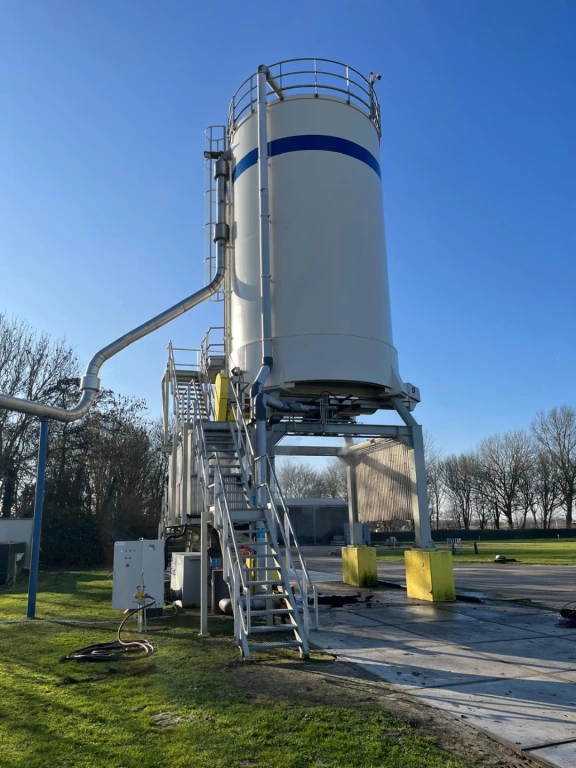
The storage and loading of wastewater treatment plant sludge are particularly sensitive operations in terms of odor nuisance.
When the silo discharge hatches are opened, odorous compounds accumulated in the sludge can be suddenly released into the atmosphere, causing significant discomfort for operators and nearby areas.
Controlling these emissions is a major challenge for wastewater treatment plant operators seeking to implement an effective odor control solution, reduce the environmental impact of their operations, and neutralize odor nuisances as close as possible to the emission source.
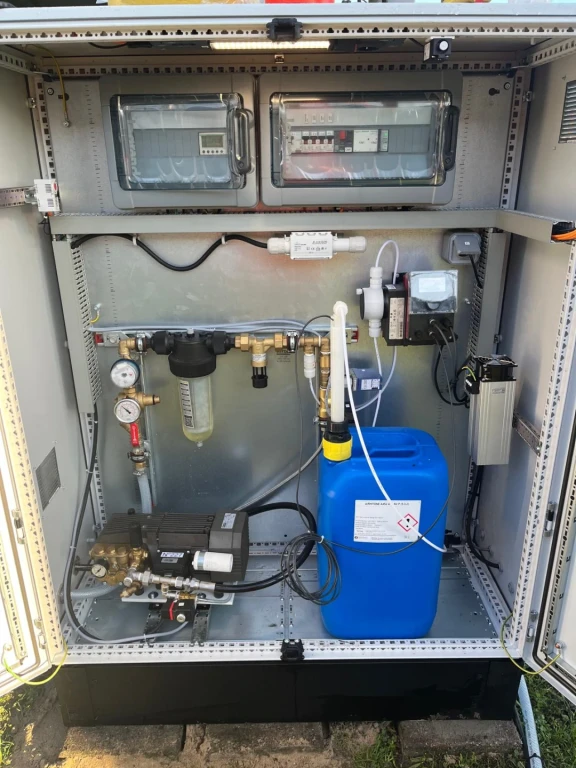
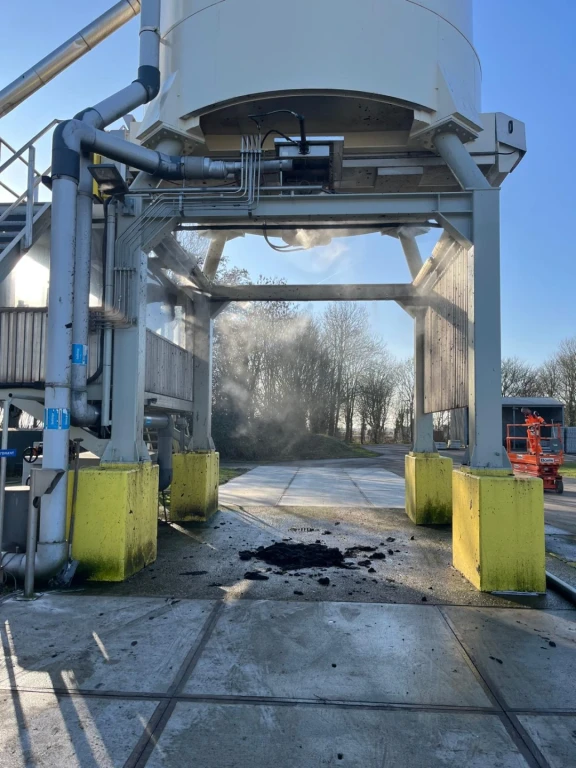
To treat odors generated during sludge loading operations, AIRHITONE deployed a high-pressure spraying solution specifically designed for high-intensity, intermittent emissions.
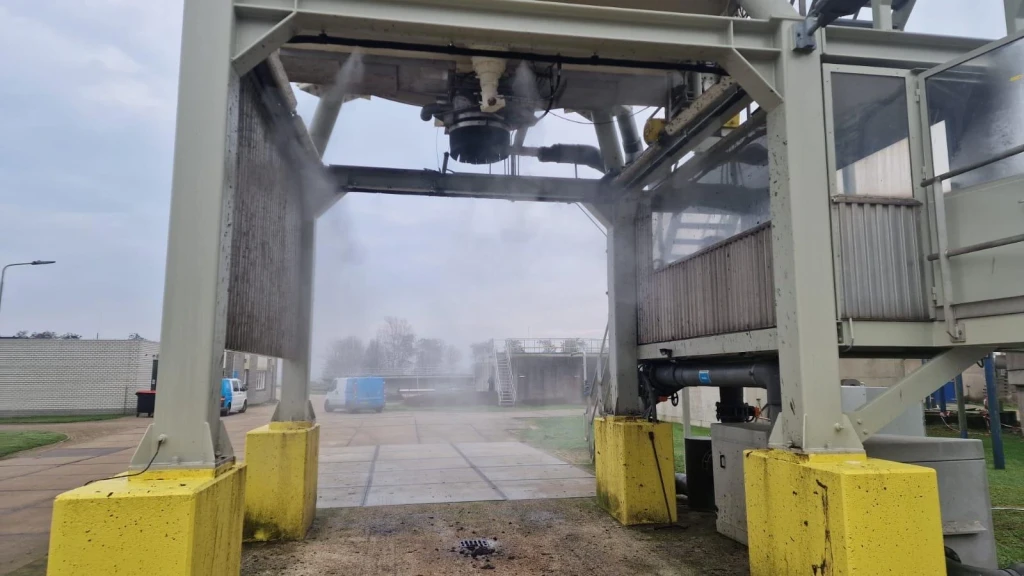
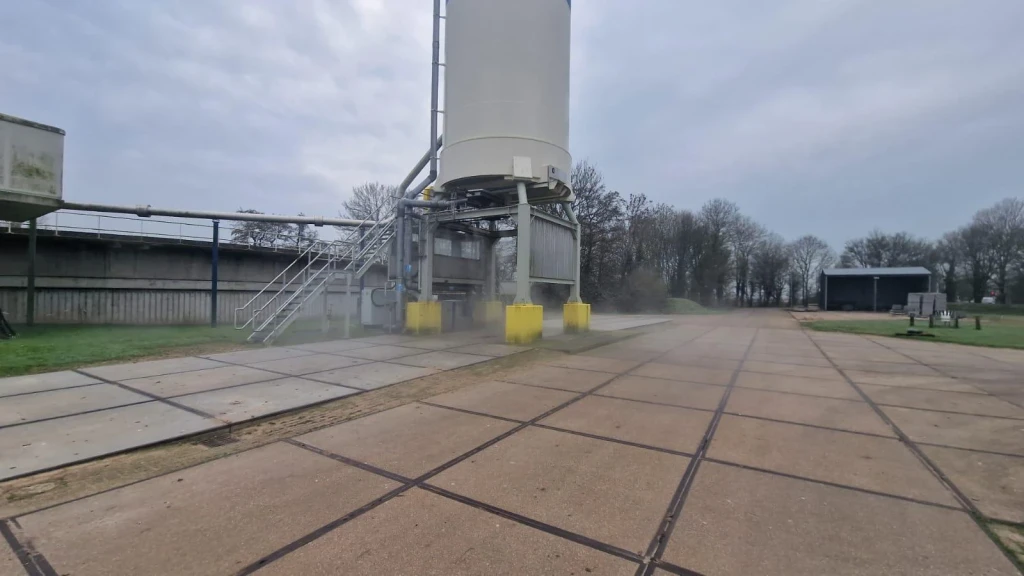
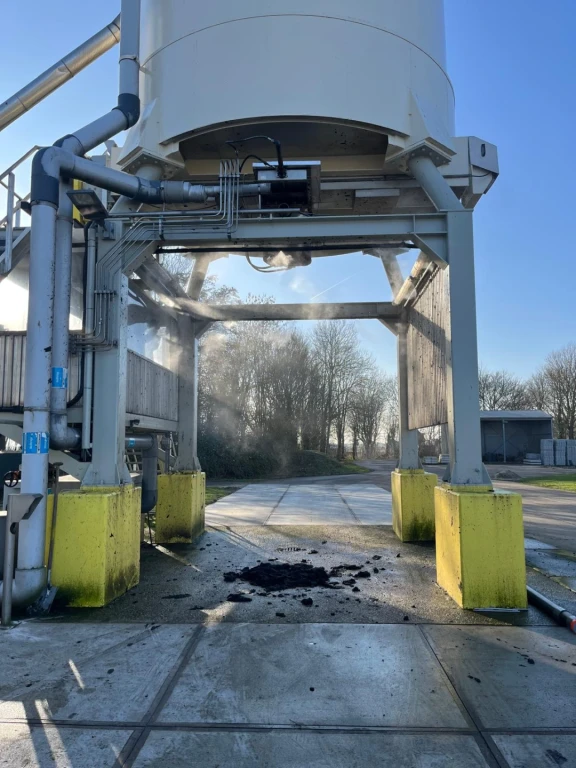
The technology disperses an odor neutralizer in the form of fine microdroplets, creating a true odor-neutralizing curtain around the truck for the entire duration of the loading process.
This approach neutralizes odor nuisances as soon as they are emitted and significantly limits the dispersion of odorous compounds into the surrounding environment.
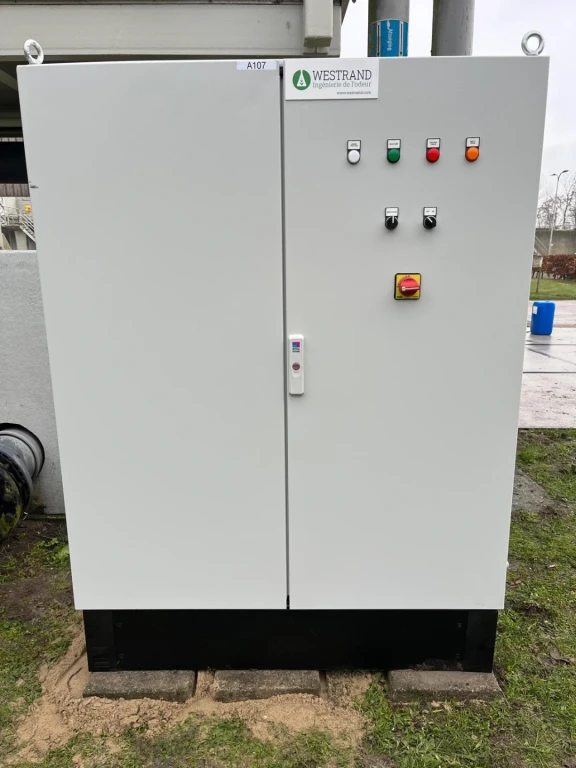
The system includes:
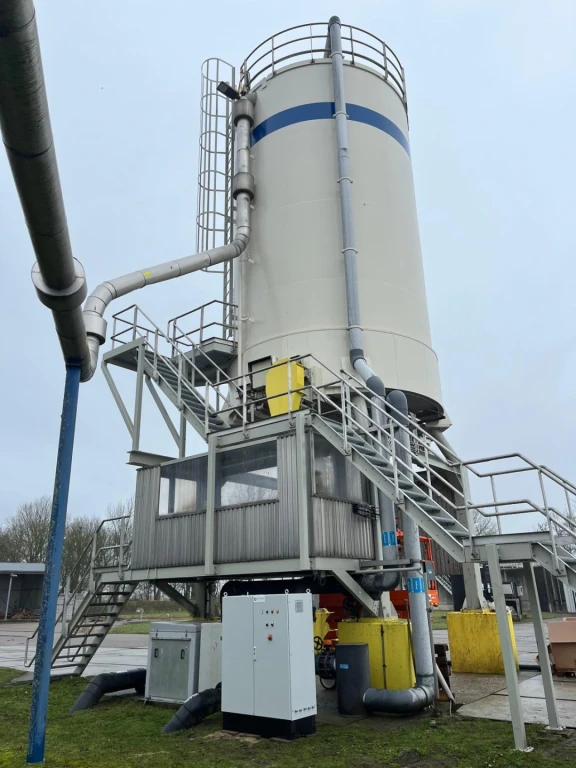
The ramp is installed directly beneath the sludge storage silo to ensure odor treatment as close as possible to the source of emission.
The system is directly linked to the dry contact that opens the silo hatches.
When a truck is positioned beneath the silo for sludge loading, the opening of the hatches automatically triggers the activation of the high-pressure spray system.
An odor-control curtain then forms around the vehicle and the transfer area to ensure the neutralization of odorous emissions throughout the entire loading operation.
When the hatches close, a delay of approximately five minutes is maintained to continue treating residual odors emitted during truck departure and tarping operations.
This automated system ensures maximum treatment efficiency while optimizing reagent consumption.
Thanks to this system, the wastewater treatment plant benefits from a high-performance odor control solution that effectively neutralizes the odors generated during sludge loading.
The system thus helps to sustainably reduce the site’s odor impact while ensuring fully automated operation that is seamlessly integrated into the operational process.